By Annelise “Lulu” Hagen, New York Yoga Instructor
“Well, at least you’ll deepen your understanding of anatomy, ” I consoled myself.
I just left the doctor’s office after some scary symptoms showed up, leading me to wonder if I had a respiratory infection. I found it hard to breathe, and experiencing sharp stabbing pain from my diaphragm up to my left collarbone. I worried that the walking pneumonia I had contracted a few years ago was returning, or maybe an old bout of Bronchitis was flaring up. I knew that bronchial infections had a way of coming back during the holidays, like unwanted guests. “I feel like I got sucker punched in the gut,” I said when describing my symptoms to my husband. Bronchitis was flaring up. I knew that bronchial infections had a way of coming back during the holidays, like unwanted guests. “I feel like I got sucker punched in the gut,” I said when describing my symptoms to my husband.
“Your cartilage is separated from your sternum and ribs. It’s a common injury,” my doctor informed me.“Is there anything I can do?” I asked.
“Just rest and take Tylenol and naproxen. These take a while to heal, and can be easily re-injured.” Oh great. I thought. He means I should stop doing Yoga for a while. “What about supplements?” I persisted.
“You’re just aging,” he replied. “Your tissues and joints are less resilient. If you can figure out something to take for that, you’ll be a millionaire.” Wow. So I am not only coming apart at the seams, I’m also a crone doomed to decrepitude.
“We’re learning a lot about aging and the cells, but it won’t come home to roost in a practical way for another 100 years. Too late for us!” he added cheerfully. He bounded off to see another patient.
I left the building and ruminated. While I trusted my doctor, I felt dissatisfied with my diagnosis and the apparent lack of a solution. Periodically, I get an injury that forces me to slow down, something I usually resist. Although these injuries have helped me to delve deeper into anatomy, thus sparing my students the same pain, I was getting tired of being my own guinea pig. I wondered if I was just recreating the same old drama of going over my limits and having my body slam the brakes.
When I got home, I hit the internet. I Googled “separated cartilage, ribs,” and found several helpful websites for athletes and weightlifters. I even got a name for my problem. Interestingly, the runner’s website I discovered suggested taking Glucosamine. This would certainly address the joint issue. “OK, so I will take glucosamine and lay off the deep twists and backbends,” I thought. I was a little bummed out, as I had just begun to kick up my physical practice a notch after an enforced hiatus due to mothering a toddler.
Pain is the body’s way of informing us that we need to pay attention. Like anger, it is a red flag that we can heed or ignore. I know myself well enough to know that I could go either way. I like to believe that I am open to change, but basically, I want what I want when I want it. I can be a little compulsive, allowing things I enjoy to become catch-alls for my stress and tension. In other words, I can use my Asana practice as a fix. I talk a good game about Yoga being an eight-limbed path, but the truth is, I sometimes short the Dharana and the Dhyana for the Asana.
Like other karmic lessons, injury would keep happening until I got the message and changed. I remembered what Sharon Gannon, one of my first teachers, said. “If we practice for small, selfish reasons, we will not progress.” Wasn’t it true that lately I had gotten a little more gung-ho about my physical practice in order to ‘get back into shape’? Yes, I was approaching my practice from an ego-based standpoint. I wanted a tighter butt, flatter abs, and a bit of a high. Moreover, by identifying with my body, I was forgetting that my true Self had nothing to do with the physical. I recalled a Jivamukti teacher named Ruth who had once had us chant, “I am not this hairstyle”.
As is my tendency, I began to scrutinize my motives and stringently chastise myself. Then an inner dialogue, between the disciplinarian and the id began.
“But I am a teacher! Of course I have to embody the asanas perfectly! Does being a teacher mean ignoring pain and approaching your practice from Vanity?” I knew the answer lay in the middle. I also knew I needed to deepen my meditation practice, and that this was the perfect time to commence. The chitta vrittis were merciless. Irony stabbed me sharper than the injury. Just the other day, I had quoted the Yoga Sutras on attachment:
Sutra 2.7
“Sukhanusayi raga”
-Attachment is that which follows identification with pleasurable experiences.
Sutra 2.8
“Dukhanusayi dvesha”
-Aversion is that which follows identification with painful experiences.
Using Swami Satchitananda’s lucid commentary, I had told my students that want and aversion were two sides of the same coin, and that the Yogi avoided both as impediments to the path of realization. Thinking that your Yoga practice would make you more beautiful or even fit was a trap, I said. Similarly, avoiding situations that were unpleasant was also a roadblock. We must cultivate self -study and look within, for the source of happiness comes from inside. Like the musk deer who runs everywhere looking for the source of sweetness, it actually emanates from ourselves.
Ok, great. I get it. I have been pushing a little too hard, and if I lay off, and surrender, I can align with my higher Self and let go. My old and deep-seated beliefs were causing me suffering. Just what were these attachments, in the form of beliefs, anyway?
1. Pain is necessary and virtuous.
On some level, my striving and pushing to be better and go harder and deeper was an attachment to pain. Also, when I thought about the area I had injured ( the physical corollary to the heart center ) I realized that I was somatizing an emotional imbalance; that, as a new wife and mother, I was being stretched to give more and open my heart- maybe I had gone a bit far, and needed to reserve something for myself.
2. Things have to be hard to have merit.
I believe that I have to struggle to be worthy. In doing so, I miss out on Grace.
3. I am running the show.
I don’t want to slow down and surrender. It’s my way or the highway.
I realized that the feelings of powerlessness I had been experiencing in my life were overwhelming to me, and that I feared slowing down to experience them. Since having the baby and cutting back on work, I have felt more dependent on my husband.
The economy tanking had caused my private client base to dwindle. Making less money had activated old fears of abandonment and shame. I was struggling to regain “control” and in the process, I was abandoning my best ally: a higher power.
The old mantra I have used in meditation came back to me. “be still, and know that I am.” I don’t have to be perfect. I can just be willing. I sat down and read a little from one of my meditation books. Then I sat and observed my breath.
Slowing down to meditate wasn’t easy for me. I had fallen out of the practice, and I was having trouble getting back on the horse. My mind wandered down familiar pathways of judgment and future tripping. I even blamed myself for not meditating well enough. Luckily, enough residual bhakti lingered from my past efforts to help me back to one-pointedness in brief flashes. I reminded myself that this was the process- observing the mind doing its contortions without judgment, and coming back to the object of concentration. I am here now. I am in this moment.
I realized I was ready to let go of my attachment to pain. I don’t know how I got so attached to begin with, but I knew I was ready to let go.
A few days later, my husband and I had a play date with another couple from our daughter’s preschool. We were enjoying canapés and making small talk when I discovered that the dad of the kid we were visiting was both a physical therapist and a cranio-sacral specialist. I told him about my injury. He perked up. “Do you mind if I take a look?” he asked. He gently stood behind me, and with the lightest of touch ran his index finger along my top rib and sternum. “Your rib is out.” He said. “I think I can fix this. “Go ahead”, I told him. With the most subtle pressure, he gently slid my rib back into its socket. I immediately felt a sense of relief and the aftermath of the injury’s trauma as realignment settled in.
After the adjustment, I resumed my practice.
And guess what? The pain came back. So now, here I sit, typing this piece. When I get done, I am going to meditate. After I have some toast and some coffee. And check my email. Really. On the other hand, maybe I will just take class. I can modify, I swear!
AHIMSA (non-violence) begins at home
If I am hard on myself, and perpetuate painful practice, I ultimately cause violence. The antidote to violence is compassion. Rather than judge myself harshly, I must come to an understanding of myself and of my tendencies, with love and humor. By releasing the idea that I have to be perfect, and embracing the concept that I am perfect as I am, warts and all, I remove the need to improve. And by not needing to improve, I am free to be myself. My practice then becomes one of love and peace, rather than striving and forcing.
“Yoga practice is like an obstacle race; many obstructions are purposely put on the way for us to pass through. They are there to make us understand and express our own capacities. We all have that strength, but don’t seem to know it. We seem to need to be challenged and tested in order to understand our own capacities. In fact, that is the natural law. If a river just flows easily, the water in the river does not express its power. But once you put an obstacle to the flow by constructing a dam, then you can see its strength in the form of tremendous physical power.”
-Swami Satchitananda, commenting on sutra 2, 30 : “Vyadhi Styana Samsaya pramadalsyaviratibhrantidarsanalabdhabhumikatvanavasthitatvani cittavikspeastentrayaha”
(Disease, dullness, doubt, carelessness, laziness, sensuality, false perception, failure to reach firm ground and slipping from the ground gained- these distractions of the mind stuff are the obstacles.)
Ultimately, through self-study and a balanced practice, I may apply this sutra:
Sutra 2.16
Heyam dukham anagatam
-Pain that has yet to come is avoidable.
The path of Yoga is, ultimately, a process. We commit ourselves to a mysterious path that may have no discernible endpoint. Along the way, we encounter challenges.
Through these inevitable obstacles, with fortitude and attention, we may realize a greater strength. I am grateful to my injuries for teaching me these lessons. And I hope that I can continue learning with more joy and less pain along the way.
Thursday, March 31, 2011


Wednesday, March 30, 2011
"Peace Offering" Yoga
Hey New York Yogis,
Check out this amazing video choreographed by New York Yoga teacher Molly Lehman, featuring New York Yoga students! Of the video, Molly writes: "Yogis gather together in NYC with the collective intention of creating more peace and happiness in the world. May it inspire everyone to try yoga. Lokah Samasta Sukhino Bhavantu."
Choreography and creative vision by Molly Lehman.
Revery Media New York City http://www.reverymedia.com/
The Cast:
Erin Fogel, Meg Carlough, Beth Hazan, Dave Hazan, Anna Surbatovich, Jessica Chazen, Chelsea Kazepis, Jonathan Poplack, Monica Baik, Monika Sharma, Sarah Freund, Brooke Murphy, Denise Brown, Kasey Ryan, Zarah Kravitz, Jessica Gilo, Dawn Olsen, Julia Hess, Christine Ferrara, Craig Sulzburgh, Andrew Tanner, Stephanie Miller, Krissy Shields, Jenn Burke, Abigail Burke, Charlotte Burke, Bunny Grossinger, Nicholas Woodridge, Kim West and Chequers Shea-Abrams
Song:
Trevor Hall
"Where's the Love"
trevorhallmusic.com/
Check out this amazing video choreographed by New York Yoga teacher Molly Lehman, featuring New York Yoga students! Of the video, Molly writes: "Yogis gather together in NYC with the collective intention of creating more peace and happiness in the world. May it inspire everyone to try yoga. Lokah Samasta Sukhino Bhavantu."
Choreography and creative vision by Molly Lehman.
Revery Media New York City http://www.reverymedia.com/
The Cast:
Erin Fogel, Meg Carlough, Beth Hazan, Dave Hazan, Anna Surbatovich, Jessica Chazen, Chelsea Kazepis, Jonathan Poplack, Monica Baik, Monika Sharma, Sarah Freund, Brooke Murphy, Denise Brown, Kasey Ryan, Zarah Kravitz, Jessica Gilo, Dawn Olsen, Julia Hess, Christine Ferrara, Craig Sulzburgh, Andrew Tanner, Stephanie Miller, Krissy Shields, Jenn Burke, Abigail Burke, Charlotte Burke, Bunny Grossinger, Nicholas Woodridge, Kim West and Chequers Shea-Abrams
Song:
Trevor Hall
"Where's the Love"
trevorhallmusic.com/
Tuesday, March 22, 2011
Sunset Yoga at The Intrepid
 On Sunday, March 13th, approximately 60 yoga enthusiasts participated in a wonderfully serene Sunset Yoga experience in the Great Hall of the Intrepid Museum.
 In a partnership between New York Yoga, a yoga studio on the Upper East Side and The Intrepid, yogis from all around practiced a 75 minute Vinyasa class with noted New York Yoga Instructor Jenny Gammello.
 Gazing through breathtaking floor to ceiling windows over the rippling water, the yogis enjoyed an awe-inspiring 75 minutes of yoga practice as the sun set over the Hudson River.

 100% of the proceeds from the event went to the wonderful work of YogaBear, a 501(c)(3) whose mission is to make yoga available to cancer patients and survivors through partnerships with hospital and yoga studios.
Meet the Teacher of the Month
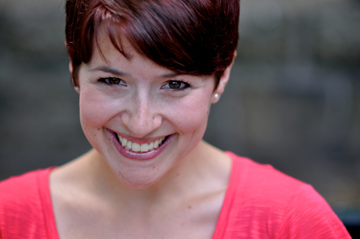
Don't let the sweet smile fool you - Sara DeLaney delivers a challenging Hot Vinyasa flow class that will leave you sweating. She will push you but leave you asking for more, because her classes are a perfect blend of power and playfulness. Expect to hold utkatasana while you groove to Sara's fabulous music and encouraging words.
Check out Sara after work on Monday night at 8:15pm Hot Vinyasa and Friday night at 5:15pm Hot Vinyasa. Or if you are an early bird, come start your morning right with 6:20am Hot Vinyasa on Tuesday or Friday - Sara's radiance with surely leave you ready to take on any day.

It was one of those mat to mat, wall to wall classes and I almost left. Then, at one point during the class, we burst into a random dance party - it was one of the greatest most powerful moments I've ever experienced.
How long have you been teaching?
What makes your class unique?
I think I have a good balance between the challenge of my class mixed with the sometimes silliness of it. I like to structure my class around my music too - music being the second most important piece in my life.
What is your favorite pose to teach?
Utkatasana - because it's hard. With the challenge comes a lot of possibility and opportunity.
What is your favorite pose to practice?
It changes daily - but lately I've really been digging triangle pose. It's a pose that usually comes right at the point in class where I'm ready to open - and that pose is meant to open you up.
Best advice for beginners?
Don't come with any expectations. Just know that wherever you are is exactly where you're meant to be.
Best advice for more advanced yogis?
What is your biggest yoga pet peeve?
Reader questions...
If you could practice yoga anywhere in the world, where would it be?
It's going to sound silly but at Zuda, where I did my training, because it's where my teachers are and it's where my yoga-heart is.
When you're having a bad day, what yoga poses help calm your nerves?
I do a lot of ujjayi breathing which really helps, but the pose that calms my nerves the most is child's pose.
Check out Sara after work on Monday night at 8:15pm Hot Vinyasa and Friday night at 5:15pm Hot Vinyasa. Or if you are an early bird, come start your morning right with 6:20am Hot Vinyasa on Tuesday or Friday - Sara's radiance with surely leave you ready to take on any day.
When did you first discover yoga?
Yoga has always sort of been in my awareness and I took classes here and there, but I fell for yoga when I took my first class at Zuda Yoga in Sacramento, California.
It was one of those mat to mat, wall to wall classes and I almost left. Then, at one point during the class, we burst into a random dance party - it was one of the greatest most powerful moments I've ever experienced.
How long have you been teaching?
Coming on two years now. I first started teaching at Sac Ballet while I was in training - jumped into the fire while still learning. It was great.
What makes your class unique?
I think I have a good balance between the challenge of my class mixed with the sometimes silliness of it. I like to structure my class around my music too - music being the second most important piece in my life.
What is your favorite pose to teach?
Utkatasana - because it's hard. With the challenge comes a lot of possibility and opportunity.
What is your favorite pose to practice?
It changes daily - but lately I've really been digging triangle pose. It's a pose that usually comes right at the point in class where I'm ready to open - and that pose is meant to open you up.
Don't come with any expectations. Just know that wherever you are is exactly where you're meant to be.
Best advice for more advanced yogis?
Remember why you first started coming onto your mat in the first place. People tend to get caught up in perfecting the poses, or having the best practice, and being a 'true yogi'...but that really just means showing up.
What is your biggest yoga pet peeve?
Lack of awareness - specifically if you come late and the class has started but we haven't said our Oms yet. Just wait and then come in - because you are more than welcome as soon as we're done.
If you could practice yoga anywhere in the world, where would it be?
It's going to sound silly but at Zuda, where I did my training, because it's where my teachers are and it's where my yoga-heart is.
When you're having a bad day, what yoga poses help calm your nerves?
I do a lot of ujjayi breathing which really helps, but the pose that calms my nerves the most is child's pose.
Wednesday, March 2, 2011
Find Balance in Trikonasana
March Pose of the Month - Triangle Pose
With spring just around the corner, we are starting to be drawn outside, back into the warmth of the sun. As the days grown longer, we seem to get busier and busier - don't let this take away from finding time for your practice. Take a moment to find your balance and stability in poses like Trikonasana.

Benefits:
With spring just around the corner, we are starting to be drawn outside, back into the warmth of the sun. As the days grown longer, we seem to get busier and busier - don't let this take away from finding time for your practice. Take a moment to find your balance and stability in poses like Trikonasana.

Benefits:
- Helps relieve stress and anxiety
- Relieves back and neck pain
- Strengthens and stretches thighs
- Stretches the hips, groin, hamstrings, calves, shoulders, chest and spine
- Stimulates abdominal organs - helps improve digestion
- From Tadasana, step or lightly jump your feet 3.5 or 4 feet apart. Raise your arms parallel to the floor, palms facing down.
- Turn your left foot in slightly to the right and your right foot out to the right 90 degrees. Align the right heel with the left heel.
- Firm your thighs and turn your right thigh outward, so that the center of the right knee is in line over the right ankle.
- Exhale and extend your torso to the right directly over the right leg, bending from the hip joint. Find strength through the outer heel pressing firmly to the floor.
- Rotate the torso to the left, keeping the two sides equally long. Let the left hip come slightly forward and lengthen the tailbone back towards the back heel.
- Rest your right hand on your shin, ankle or the floor outside your right foot, whatever is possible without distorting the sides of the torso. A block can also be used to support you here.
- Stretch your left arm towards the ceiling, in line with the tops of the shoulders. Keep your head in a neutral position or turn it to the left, eyes gazing softly at the left thumb.
- Stay in this pose for 30 second to 1 minute. Inhale to come up. Reverse the feet and for the same length of time to the left.
Friday, February 18, 2011
Meet the Teacher of the Month
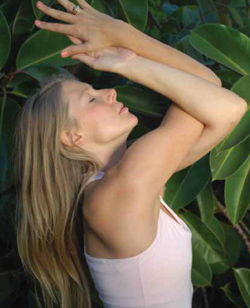
Kelly Stackhouse's light-hearted nature is good for the yogi soul. She will encourage you to have fun and approach your practice with a sense of humor. Beginners and advanced practitioners alike will find her vinyasa flow challenging with moments of surrender to breathe and to really be in the moment. Expect supportive adjustments to help you move deeper and a sequence that satisfies all the way through to savasana.
You can find Kelly at York Ave on Fridays for her 8:25am Hour of Power or her 9:35am Vinyasa All Levels; and at Hot on Tuesdays for 5:15pm Hot Vinyasa All Levels. Whether you check her out at New York Yoga or New York Yoga HOT, you will be greeted with a warm smile and have a fantastic class ahead of you.
When did you first discover yoga?
 I first discovered yoga in 2003 when I was on a meditation retreat in Thailand. We practiced yoga every morning and I was amazed to see how I could improve in so little time. I noticed my toes inching forward each morning when I stepped my foot between my hands - little improvements like that really got me interested.
How long have you been teaching?
Six years. I studied with Kathryn Beet at Yoga Space, in Toronto, and was certified in 2005.
What makes your class unique?
I don't take myself too seriously. I think there should always be moments in class where students are really having fun. I smile and joke even if students do not respond right away, I think its still appreciated and reaching them - every now and then a student smiles back.
What is your favorite pose to teach?
Pigeon. There is a certain way to talk students into relaxing much more deeply than they thought they could. I think people are intimidated by pigeon. It works such a big muscle; it can be such a release. I like teaching passive poses because I get to teach people how to give up working so hard and find surrender instead.
What is your favorite pose to practice?
Wheel. It is a struggle for me, always has been. Since it's the most challenging, I like to work on it the most. Its good for people to work on a pose they want to run away from, it says a lot about what is going on in their practice. I also love dancer because its really beautiful.
Best advice for beginners?
To be patient, to be open, to let any intimidation go. I think yoga sometimes feels like a strange world and can be confusing at first. Just take in a little at a time and it will start to make sense if you are open to it. Yoga is for everyone.
Best advice for more advanced yogis?
Sometimes backing off is the bigger challenge. I see people pushing so hard that they lose the alignment or purpose of the pose they are trying to do and it can be difficult to bring someone back. Sometimes less is more.
What is your biggest yoga pet peeve?
I don't like to image of yoga being super-hippy - yoga is as much for the hedge fund guy as it is for the stay at home mom. I don't like when yoga is typecast.
Reader questions...
How do your York and Hot classes differ?
I always base my classes on the energy of the room. There tends to be a more relaxed vibe at the York Studio. I think the heat inspires higher energy. So I'd say my class is special to both place and totally depends on the atmosphere.
Passion besides yoga?
I am a bit of a running coach. I love photography and art; I'm often at galleries or museums around the city. And I like to travel.
You can find Kelly at York Ave on Fridays for her 8:25am Hour of Power or her 9:35am Vinyasa All Levels; and at Hot on Tuesdays for 5:15pm Hot Vinyasa All Levels. Whether you check her out at New York Yoga or New York Yoga HOT, you will be greeted with a warm smile and have a fantastic class ahead of you.
When did you first discover yoga?
How long have you been teaching?
Six years. I studied with Kathryn Beet at Yoga Space, in Toronto, and was certified in 2005.
What makes your class unique?
I don't take myself too seriously. I think there should always be moments in class where students are really having fun. I smile and joke even if students do not respond right away, I think its still appreciated and reaching them - every now and then a student smiles back.
What is your favorite pose to teach?
Pigeon. There is a certain way to talk students into relaxing much more deeply than they thought they could. I think people are intimidated by pigeon. It works such a big muscle; it can be such a release. I like teaching passive poses because I get to teach people how to give up working so hard and find surrender instead.
What is your favorite pose to practice?
Wheel. It is a struggle for me, always has been. Since it's the most challenging, I like to work on it the most. Its good for people to work on a pose they want to run away from, it says a lot about what is going on in their practice. I also love dancer because its really beautiful.
Best advice for beginners?
To be patient, to be open, to let any intimidation go. I think yoga sometimes feels like a strange world and can be confusing at first. Just take in a little at a time and it will start to make sense if you are open to it. Yoga is for everyone.
Best advice for more advanced yogis?
Sometimes backing off is the bigger challenge. I see people pushing so hard that they lose the alignment or purpose of the pose they are trying to do and it can be difficult to bring someone back. Sometimes less is more.
What is your biggest yoga pet peeve?
I don't like to image of yoga being super-hippy - yoga is as much for the hedge fund guy as it is for the stay at home mom. I don't like when yoga is typecast.
Reader questions...
How do your York and Hot classes differ?
I always base my classes on the energy of the room. There tends to be a more relaxed vibe at the York Studio. I think the heat inspires higher energy. So I'd say my class is special to both place and totally depends on the atmosphere.
Passion besides yoga?
I am a bit of a running coach. I love photography and art; I'm often at galleries or museums around the city. And I like to travel.
Tuesday, February 1, 2011
Help Cupid's Arrow in Urdhva Dhanurasana
February Pose of the Month - Urdhva Dhanurasana
With Valentine's Day approaching, it may be time to add some heart openers to your practice. For our pose of the month, we want to shoot our hearts to the sky - with Urdhva Dhanurasana or Wheel Pose. Since this is also referred to as Upward Bow Pose, it is a perfect match for February. Use this super strengthening pose to increase energy, relieve stress and stretch the low back.
 Benefits:

With Valentine's Day approaching, it may be time to add some heart openers to your practice. For our pose of the month, we want to shoot our hearts to the sky - with Urdhva Dhanurasana or Wheel Pose. Since this is also referred to as Upward Bow Pose, it is a perfect match for February. Use this super strengthening pose to increase energy, relieve stress and stretch the low back.
- Strengthens wrists, arms, legs, buttocks, abdomen and spine
- Expands chest and lungs
- Increases energy
- Counteracts depression
- Theraputic for asthma, back pain, infertility and osteroporosis
- Begin lying on your back. Bend your knews and set your feet on the floor, heels as close to the sitting bones as possible. Place the hands beside the head with the fingers pointed back towards the shoulders.
- Begin to lift the hips off the floor - keep your thighs and feet parallel.
- Press firmly through the feet and hands to lift up onto the crown of you head - keep your arms parallel.
- Press your feet and hands into the floor; begin to lift your head off the floor as you straighten your arms. Turn the upper thighs slightly inward and firm the outer thighs. Let the head hang to look at the floor.
- Imagine the bed behind your heart and focus on expanding to aim up and out. Advanced practitioners can raise one left to the sky. Stay in the pose anywhere from 5 to 10 seconds or more, breathing easily. Repeat anywhere from 3 to 10 times.
- Reverse your steps to come out of the pose, lower your body gently to the floor.
Subscribe to:
Posts (Atom)